Manifesting Spiritual Protection for Ghost Hunting & Spirit Sessions

The Unknown Quest Ritual & Intention File 01

Manifesting& Spiritual Protection

Across spiritual and folk traditions, people have used prayer, intention, visualisation, symbols, cleansing and ritual boundaries to create a sense of protection before entering unfamiliar or emotionally charged spaces.

Ritual as a boundary

Before you enter,
decide how you leave.

Spiritual protection means different things in different traditions. For some people it is prayer. For others it is visualisation, protective jewellery, smoke, salt, water, scripture, ancestor invocation or simply a deliberate statement of personal boundaries.

The Unknown Quest treats these as belief-based and cultural practices, not scientifically proven barriers against paranormal forces. Their value may be religious, symbolic, psychological, communal or personal depending on the practitioner.

What these practices often share is structure: prepare yourself, state what you intend to do, create a boundary, conduct the experience and deliberately close it afterwards.

TUQ approach You do not need to believe every tradition literally to treat it with respect. And if a practice makes you more frightened, distressed or fixated rather than calmer and more grounded, stop the ritual and return to ordinary surroundings.
Historic timber-panelled room photographed during a paranormal investigation, with a pale circular anomaly visible near the left wall
Field investigations often begin in ordinary historic spaces where atmosphere, expectation and unexplained details can easily overlap. TUQ field image

The ritual arc

Before. During.
After.

A simple structure is often more useful than carrying a bag full of objects you do not understand or normally use.

Stage 01 · Before

Set the boundary.

Decide why you are going, what you are comfortable with and what would make you stop. Use a familiar prayer, visualisation or statement of intention if that forms part of your practice.

  • Slow your breathing and settle before beginning.
  • State your purpose clearly and simply.
  • Choose a personal boundary: “I observe; I do not invite.”
  • Agree an exit signal with anyone investigating with you.
Stage 02 · During

Stay anchored.

Keep part of your attention on ordinary reality: where you are, who is with you, what the environment is doing and how you actually feel.

  • Keep track of time and surroundings.
  • Do not escalate a ritual simply because nothing happens.
  • Pause if anyone becomes frightened or overwhelmed.
  • Record the experience before interpreting it.
Stage 03 · After

Close it deliberately.

Ending matters. Many traditions include a closing prayer, thanks, extinguishing a candle, washing, changing clothes, eating or simply stating that the session is over.

  • Say clearly that the investigation or ritual has ended.
  • Pack away objects rather than leaving ritual material behind.
  • Return to normal light, conversation, food and surroundings.
  • Review evidence later, not while adrenaline is still high.

Common approaches

Protection without
the shopping list

You do not need every object associated with every spiritual tradition. Choose practices that actually belong to your beliefs or that you understand well enough to use respectfully.

01 Prayer A familiar prayer or scripture can mark the beginning and end of an investigation for people whose faith already includes that practice.
02 Visualisation Some practitioners imagine light, a circle, armour or a sealed boundary around themselves. Treat it as an intentional focus rather than proof of an invisible shield.
03 Personal objects A cross, medal, charm, crystal, written verse or family object may carry personal or religious significance because of what it means to the person using it.
04 Cleansing rituals Water, incense, smoke, sound and washing appear in many traditions. Use only practices you understand, and follow real fire, ventilation and site rules.
Clear quartz crystal pendant suspended against a dark background
Clear quartz is widely used in contemporary spiritual practice, though meanings and claimed properties vary between practitioners.
Personal objects

The meaning is often in the relationship.

Crystals, medals, crosses, written prayers, jewellery and inherited objects can all be used as protective or grounding items. Their role may come from religious tradition, modern spiritual belief, family association or simply the confidence they give the person carrying them.

The important distinction is between saying “this object is meaningful in my practice” and presenting a particular material as though its paranormal effect has been scientifically established.

Cultural context

Similar objects.
Different meanings.

Research principle

Do not build a “protection kit” by stripping rituals out of context.

Salt, smoke, holy water, iron, prayer beads, protective writing and sacred plants can all appear online under the same heading. They do not come from one universal system, and they do not mean the same thing simply because all have been associated with protection.

Christian traditions Prayer, scripture, crosses, medals, holy water and blessings may form part of established devotional practice depending on denomination and community.
Islamic traditions Protective practice may centre on Qur’anic recitation, duʿāʾ and remembrance of God. These practices belong within Islamic religious life rather than generic paranormal ritual.
Jewish traditions Prayer, scripture and objects such as the mezuzah have specific religious contexts and should not be reduced to “anti-spirit charms.”
Folk traditions Iron, salt, herbs, protective marks and threshold customs appear across many European and global folk systems, but their meanings vary by place and period.
Modern spiritual practice Contemporary practitioners may combine meditation, visualisation, crystals or personal ritual. Where traditions are mixed, it is worth knowing what is modern synthesis and what comes from a specific cultural lineage.
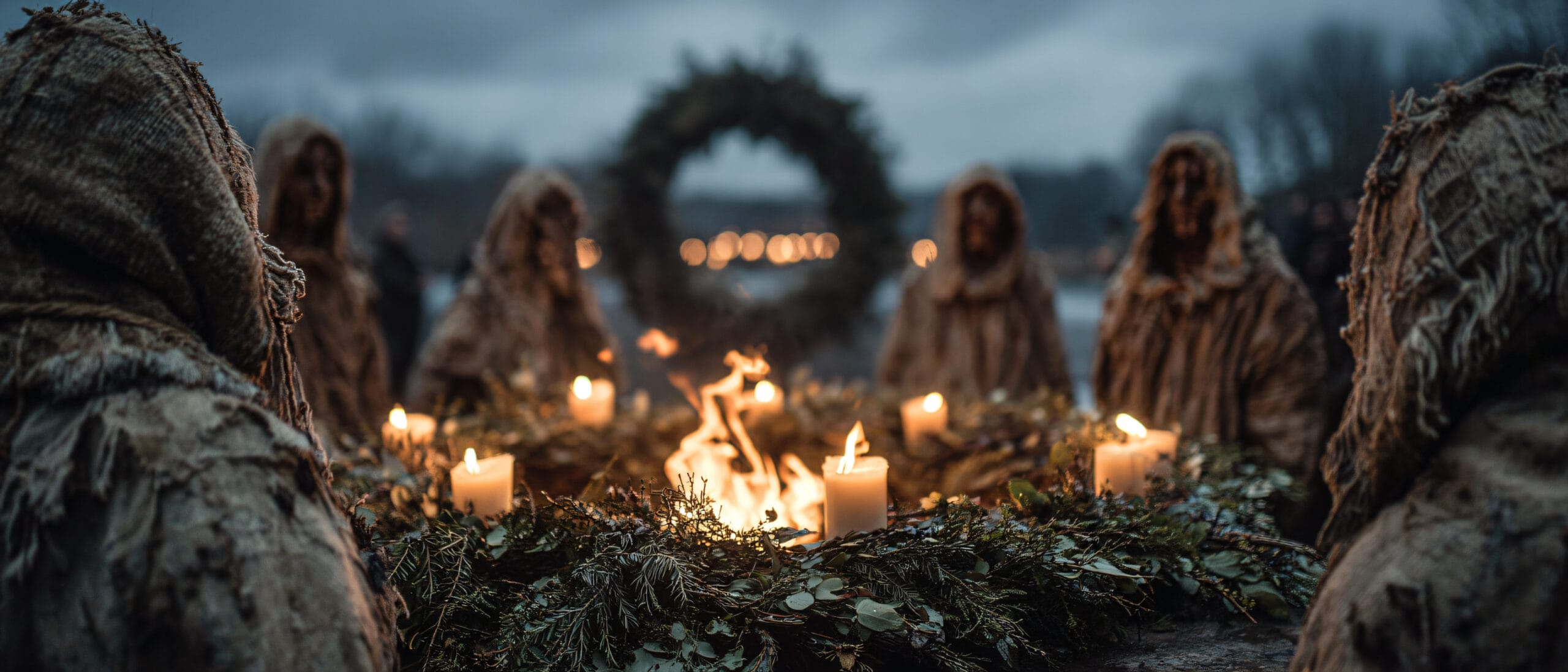
Atmospheric candlelit ritual circle outdoors with figures gathered around a central fire
Ritual imagery can be powerful, but the form, symbolism and purpose of protection or cleansing practices differ dramatically between traditions. Illustrative ritual image

Practical boundaries

Protection also means
knowing when to stop

Spiritual preparation should sit alongside ordinary safety, not replace it. A prayer does not make an unsafe building stable, a charm does not make trespassing lawful and a cleansing ritual does not remove the need to look after your own state of mind.

01 Fear is a stop signal If the experience stops being interesting and becomes genuinely distressing, leave the session rather than forcing yourself to continue.
02 Do not provoke for content You do not need to insult, challenge or “invite” anything simply because a camera is running or the investigation feels quiet.
03 Use materials safely Do not burn herbs, incense or candles where fire rules, smoke alarms, wildlife, asthma, pets or ventilation make that unsafe or inappropriate.
04 Return to ordinary life After an intense session, eat, drink, talk, sleep and do something familiar. Not every later noise or bad dream needs to become part of the investigation.
Member of The Unknown Quest team standing inside a historic room during an investigation
However you prepare spiritually, the investigation still happens in a real place, with real people, real limits and a route home. The Unknown Quest · Field archive

The TUQ Protection Protocol

Five steps.
Keep it simple.

Use this as a neutral framework and replace the spiritual element with whatever genuinely belongs to your own beliefs or tradition.

01 Ground Slow down. Notice where you are, who is with you and how you feel before starting.
02 State Define the purpose of the session and the boundary you intend to keep.
03 Protect Use your chosen prayer, symbol, visualisation or ritual if that is part of your practice.
04 Observe Pay attention without escalating every sensation into a paranormal conclusion.
05 Close End deliberately, leave the space as you found it and return to normal surroundings.