
THE UNKNOWN QUEST HAUNTED TRAVEL FILE 02
NORTH AMERICA’S
TOP 10 HAUNTED HOTELS
Historic hotels where medical scandals, mining accidents, frontier violence and documented tragedy sit beside decades of paranormal reports.
A DIFFERENT KIND OF STAY
Check into a piece
of darker history.
Are you looking for a different kind of stay in one of America's most haunted hotels? Some hotels preserve the past in more than their architecture and antique charm, there’s also their reputation for ghostly activity. According to decades of local lore, staff accounts, guest reports and historical records a handful of properties have also earned reputations for the unexplained. Read, learn and be inspired to visit these locations by the ghosts, who checked in and reportedly never checked out. Here is a curated list from publicly available sources of 10 authentic haunted hotels, prioritizing documented dark history, specific high-activity reports, and the "gritty" reality of their pasts (asylums, mining accidents, and shootouts) rather than Hollywood/ pop culture fame.
A former cancer hospital chapter, basement morgue and room-specific resident lore.
Hospital use, renovation-era remains stories and repeated upper-floor reports.
A former hospital, original Otis elevator and rooms tied to the building’s medical past.
A Santa Fe Trail hotel where bullet holes still mark the ceiling above the haunting stories.
Ballroom, convent and orphanage history layered into one New Orleans property.
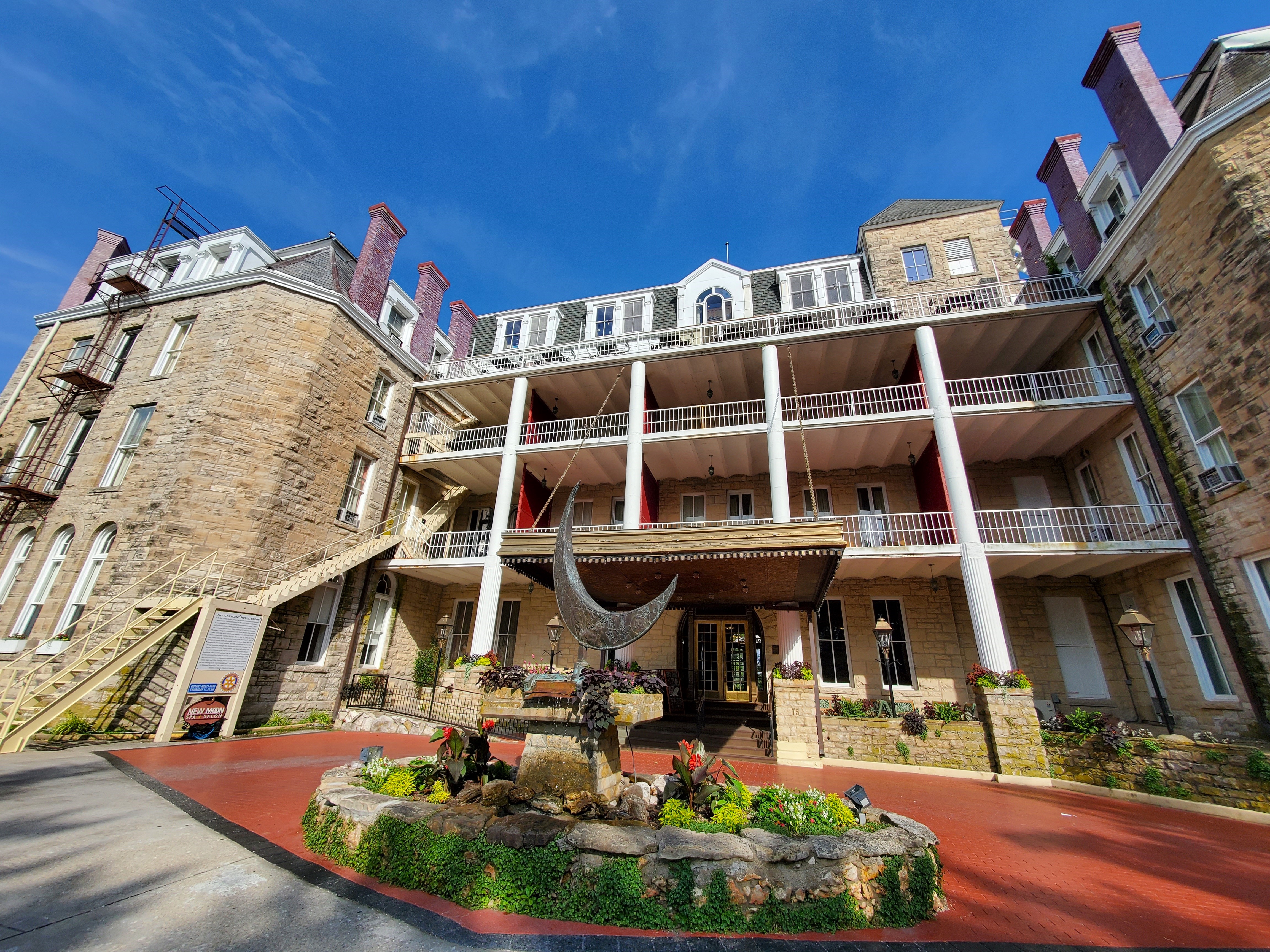
Eureka Springs, Arkansas
1886 Crescent Hotel
FIELD NOTE Poltergeist activity: Washers/dryers switching on; Sensory: Squeaking gurney wheels, heavy atmosphere, and sudden temperature drops.
The History
The Crescent earned its “America’s Most Haunted Hotel” reputation the hard way: in 1937–1939, it operated as Norman Baker’s so-called Baker Cancer Hospital, a notorious medical fraud chapter that still clings to the building’s identity.
The Haunting
Tours take guests to the basement morgue, shown with an autopsy table and a walk-in cooler the hotel says was used during the Baker era. It’s one of the hotel’s most talked-about hotspots with guests and guides repeatedly describing the morgue area as “active,” with temperature drops, heavy-atmosphere moments, and unexplained noises that start as soon as you step into the corridor. Historic Hotels of America describes a nurse pushing a gurney in the old morgue area—complete with the squeak and rattle of wheels—and even notes a maintenance worker witnessing washers and dryers switching on by themselves in the night. The hotel’s own lore points to Room 218, linked to “Michael,” an Irish stonemason said to have died during construction, and Room 419, where “Theodora” is reportedly seen fumbling for keys. Guests also talk about footsteps, knocks and if you’ve heard the bouncing-ball stories, the hotel names that presence too: “Breckie,” a young child said to be seen around the halls, often with a ball.
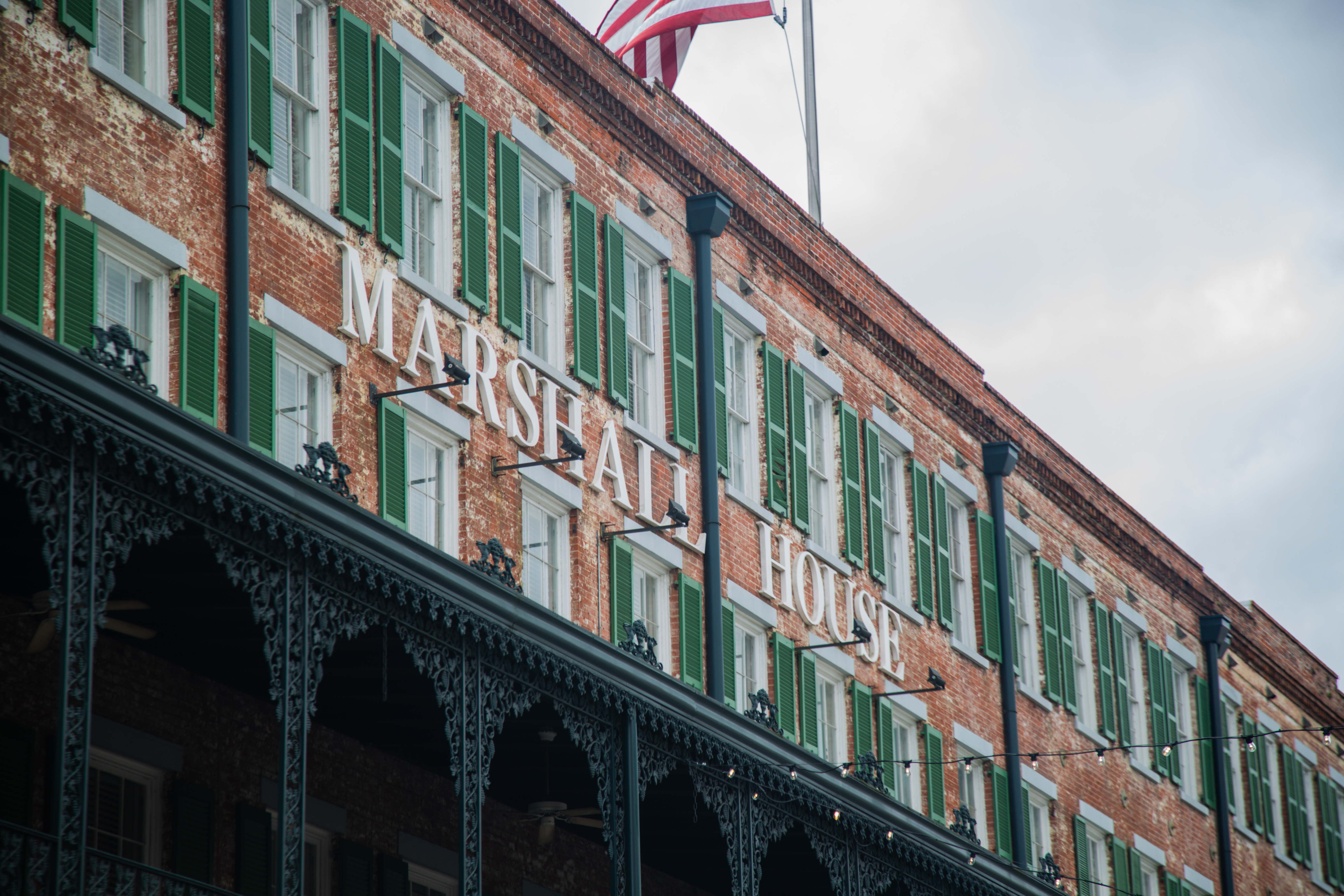
Savannah, Georgia
The Marshall House
FIELD NOTE Physical: Human remains found under floorboards; Sensory: Stubborn "unpleasant odors," doors moving on their own, and phantom laughter.
The History
Savannah’s oldest operating hotel doesn’t rely on “spooky atmosphere” alone—it has a documented history that gives the stories teeth. Built in 1851, it was occupied by Union troops and used as a Union hospital in 1864–65, and the hotel also states it served as a hospital during two yellow fever epidemics.Then comes the detail every ghost tour repeats: workers allegedly found human remains under floorboards during the late-1990s restoration, often attributed in retellings to Civil War–era medical activity (though the exact nature of what was found varies by source). If you’re booking for activity, Room 414 is the one guests request, with published guest reviews describing footsteps and doors moving on their own, and others describing a stubborn, unpleasant odor linked to that room in forum accounts.
The Haunting
And the signature story? Tour guides love to tell of a Union soldier in the lobby—missing an arm, asking for a surgeon. Beyond the soldiers, visitors have reported the playful laughter of children—remnants of the hotel's time as a yellow fever hospital and sightings of the founder, Mary Magdalene Marshall, watching over the hallways she built nearly two centuries ago. Legend or not, it’s the kind of repeatable claim that keeps this place on every serious haunted-hotel shortlist.
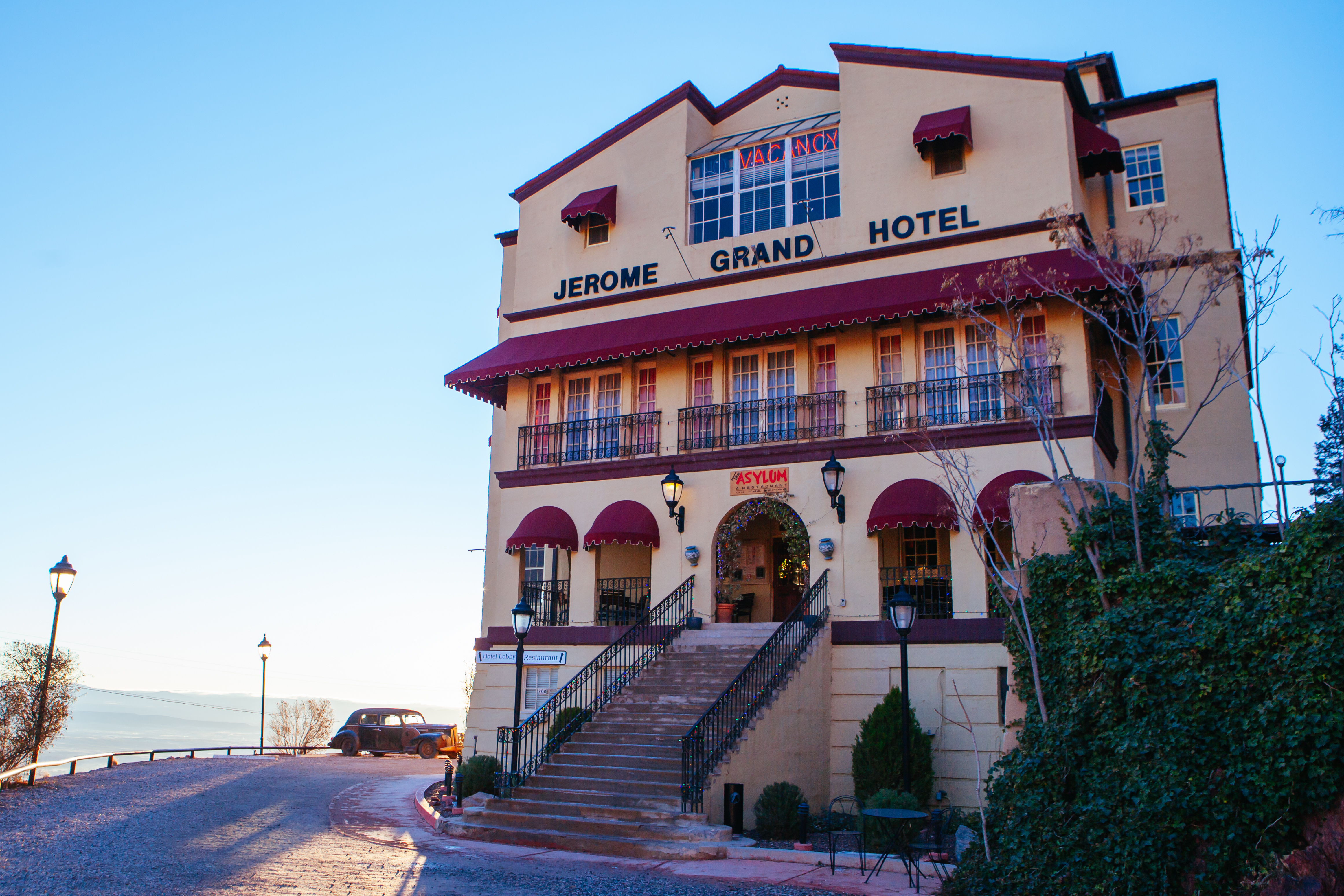
Jerome, Arizona
Jerome Grand Hotel
FIELD NOTE Physical: Furniture visibly dragged across floors; Sensory: Mechanical rattle of an empty elevator, labored breathing, and phantom cigar smoke.
The History
The Jerome Grand’s reputation starts with what it used to be: the United Verde Hospital, a poured-in-place concrete facility planned in 1926 and opened in January 1927 for a copper-mining town where serious injuries were routine. The hotel’s own history notes the hospital ran until 1950, and that a live-in caretaker died by suicide in the 1980s, after which the building was boarded up.
The Haunting
The haunting of the Jerome Grand is physically anchored by the original 1926 Otis elevator, a heavy iron cage that still serves as a reminder of the building’s life as the United Verde Hospital. This elevator is the site of the hotel’s most documented tragedy: the 1935 death of maintenance man Claude Harvey, whose body was found pinned beneath the car. Rather than just "eerie" vibes, guests report the mechanical rattle of the shaft and the elevator cab moving to floors where no buttons were pushed, as if still operated by a phantom hand. The "gritty" reality of the property is etched into the layout of the floors, where Rooms 23 and 25 (formerly known as "death rooms" during the hospital's peak years) remain the center of activity. In these spaces, the "spookiness" is replaced by specific sensory reports: the drift of phantom cigar smoke through sealed rooms and the distinct sound of heavy, labored breathing in the silence of the night. According to the L.A. Times, Room 32 is the most requested by those seeking the unexplained, with guests documenting furniture that has been visibly dragged across the floor and the persistent sensation of a cold weight at the foot of the bed.
Cimarron, New Mexico
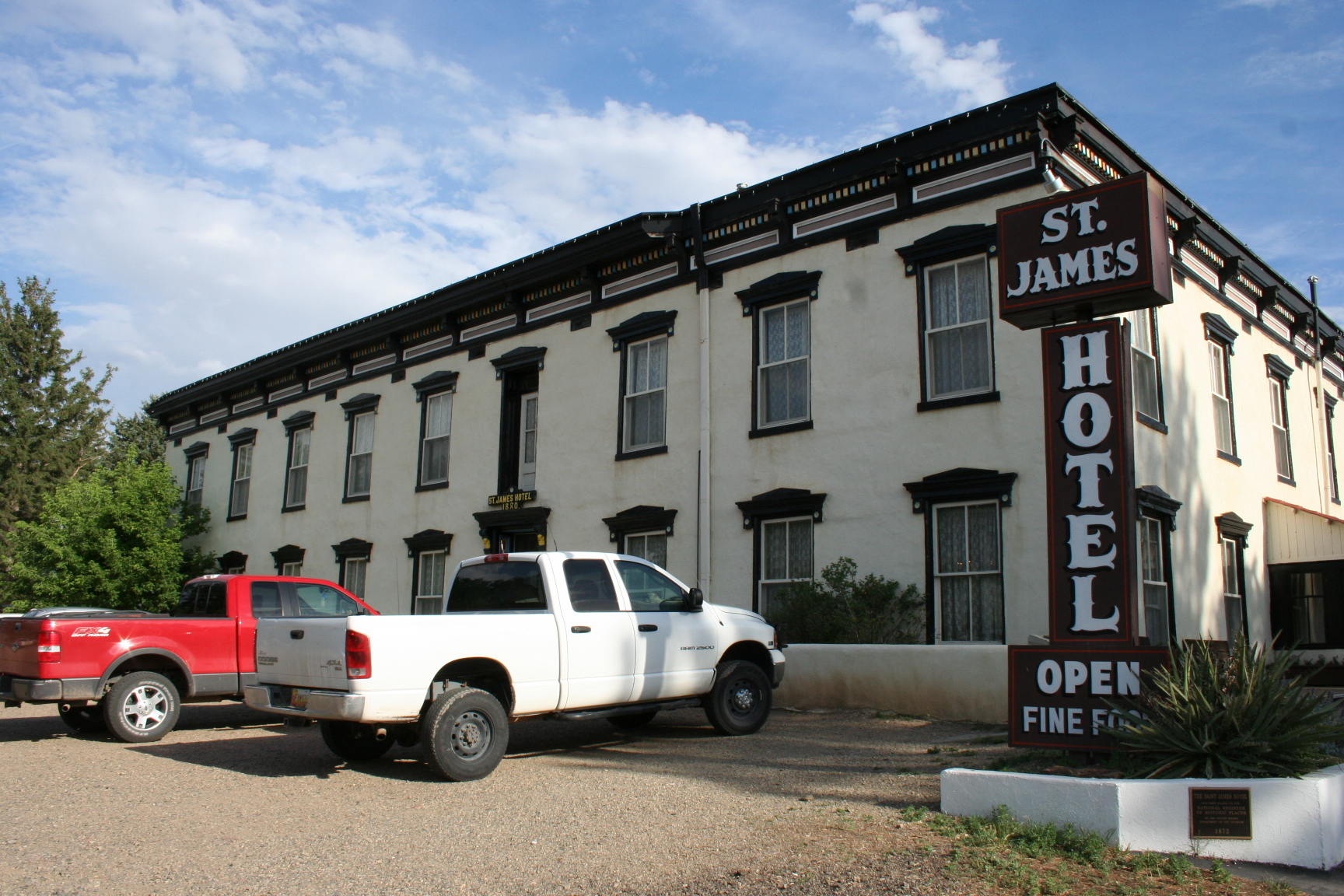
St. James Hotel
FIELD NOTE Physical: 22 bullet holes in ceiling; Poltergeist activity: Tapping on windowpanes and an "impish" presence in the bar moving objects.
The History
The St. James doesn’t have to “lean spooky” to earn its reputation—it’s a Santa Fe Trail holdover built for hard men with guns and money. Founded in 1872 by Henri Lambert, it grew into a notorious stop where the guest list is widely reported to include Old West heavyweights like Wyatt Earp and Jesse James, In 1901, when Lambert’s sons replaced the roof, they reportedly discovered the building had been shot up so badly that a second layer of wood had helped shield the upstairs—today the dining-room ceiling still shows 22 bullet holes, left there as a blunt reminder of what this place was.
The Haunting
The hauntings here are room-specific and stubborn. Room 18 is the headline: it’s padlocked and not rented, tied to the story of T.J. (Thomas James) Wright, a gambler/cowboy said to have been shot after a poker game and to have “never checked out.” Across the hall, Room 17 is linked to Mary Lambert, whose calling card is rose-scented perfume according to multiple retellings she taps at the window until it’s closed. Staff and guests also talk about cigar smoke, boot-spur footsteps, and an impish presence in the bar that likes to make itself known when the place should be empty.
Juneau, Alaska
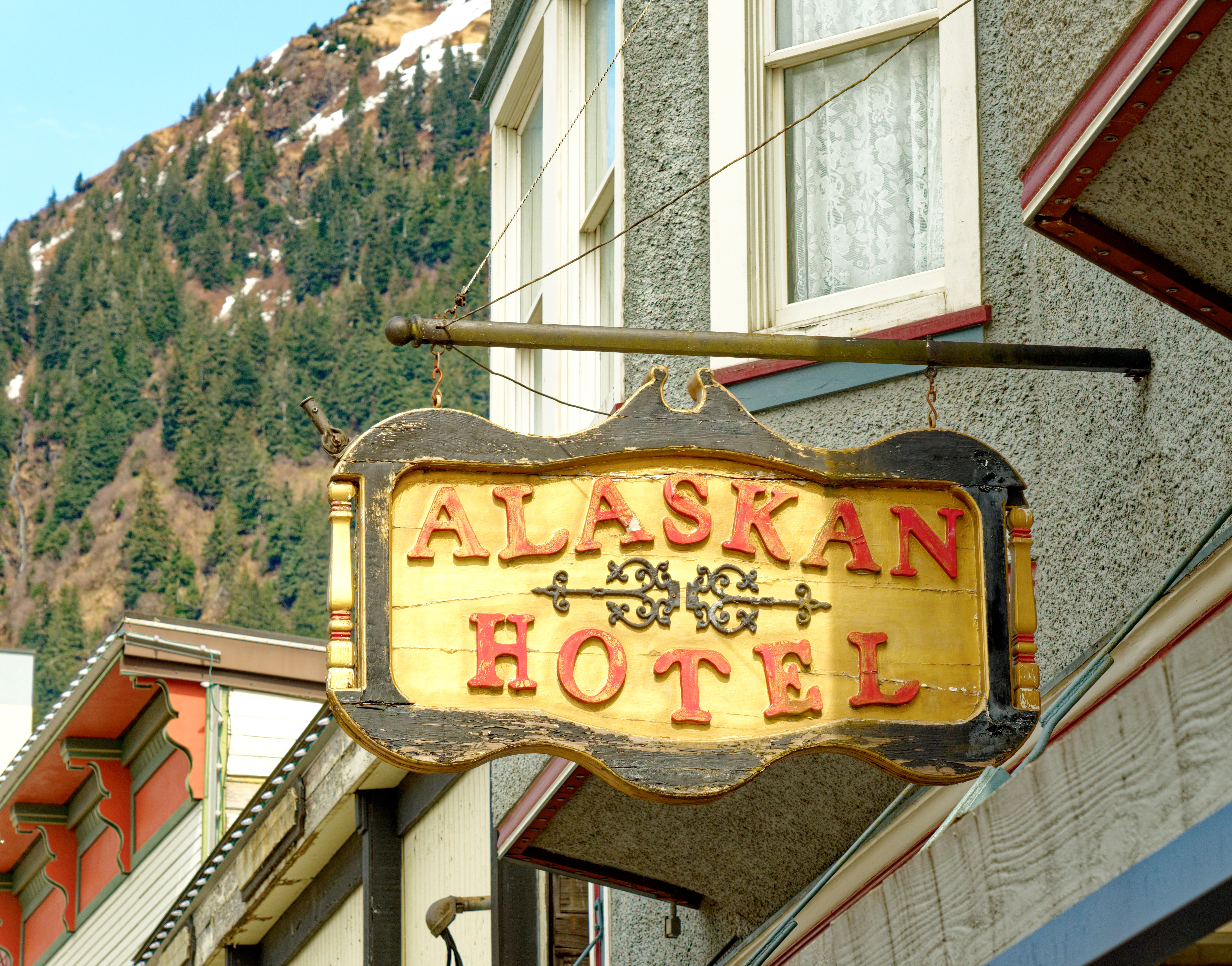
The Alaskan Hotel
FIELD NOTE Physical: Documented 2007 window jump; Sensory: The "impression" of someone sitting on the bed and the feeling of being touched or pulled.
The History
The Alaskan’s haunting reputation is welded to its real reputation: this place stayed open by adapting to whatever the law—or the Fire Marshal—was doing that decade. The building opened in 1913 and is listed on the National Register of Historic Places, with the National Park Service nomination describing it as the oldest operating hotel in Juneau. The hotel’s own history says Alaska’s “Bone Dry” Prohibition hit in 1918, prompting the bar to present itself as a soda café—speakeasy logic, Juneau-style. Tthe property functioned as a brothel twice: once legally in the early years, and later as the Northlander, which it says was shut down and condemned in 1977.
The Haunting
For paranormal tourists, the gravity points to Room 315, the bar, and the basement. In May 2007, a Navy sailor reportedly requested the “haunted room,” screamed from inside, and jumped from the window—an incident covered in local public media. Owner Bettye Adams has described Room 315 as “creepy,” and she’s also blunt that the activity isn’t confined upstairs: “there’s all kinds of haunting in the bar, in the basement.” And then there’s Alice, the hotel’s most persistent resident legend, most often tied to a reported 1917 death and a strong association with Room 219. Details describe a female presence: sightings in mirrors, the impression of someone sitting on the bed, and that unmistakable feeling that the room has company.
Deadwood, South Dakota
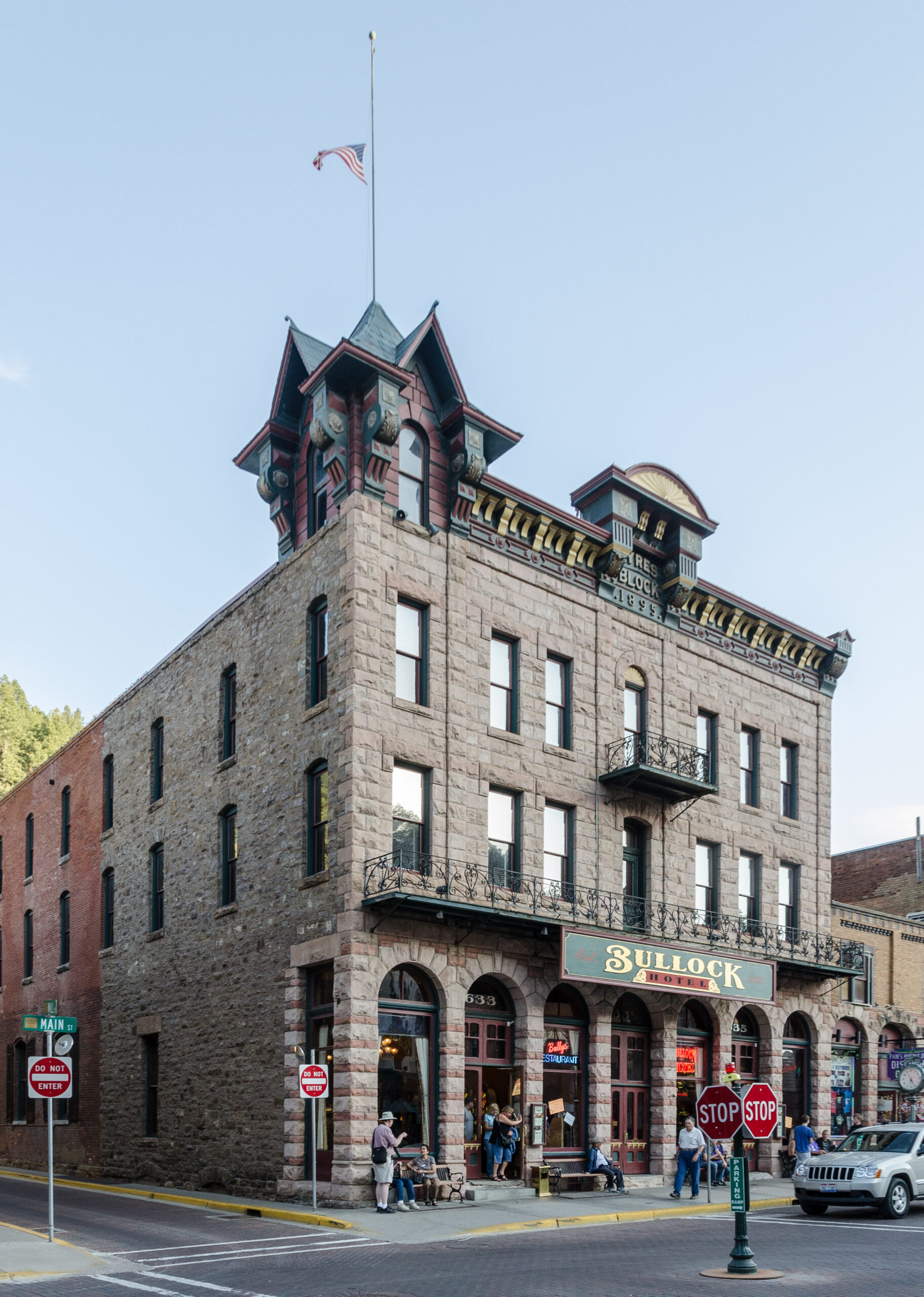
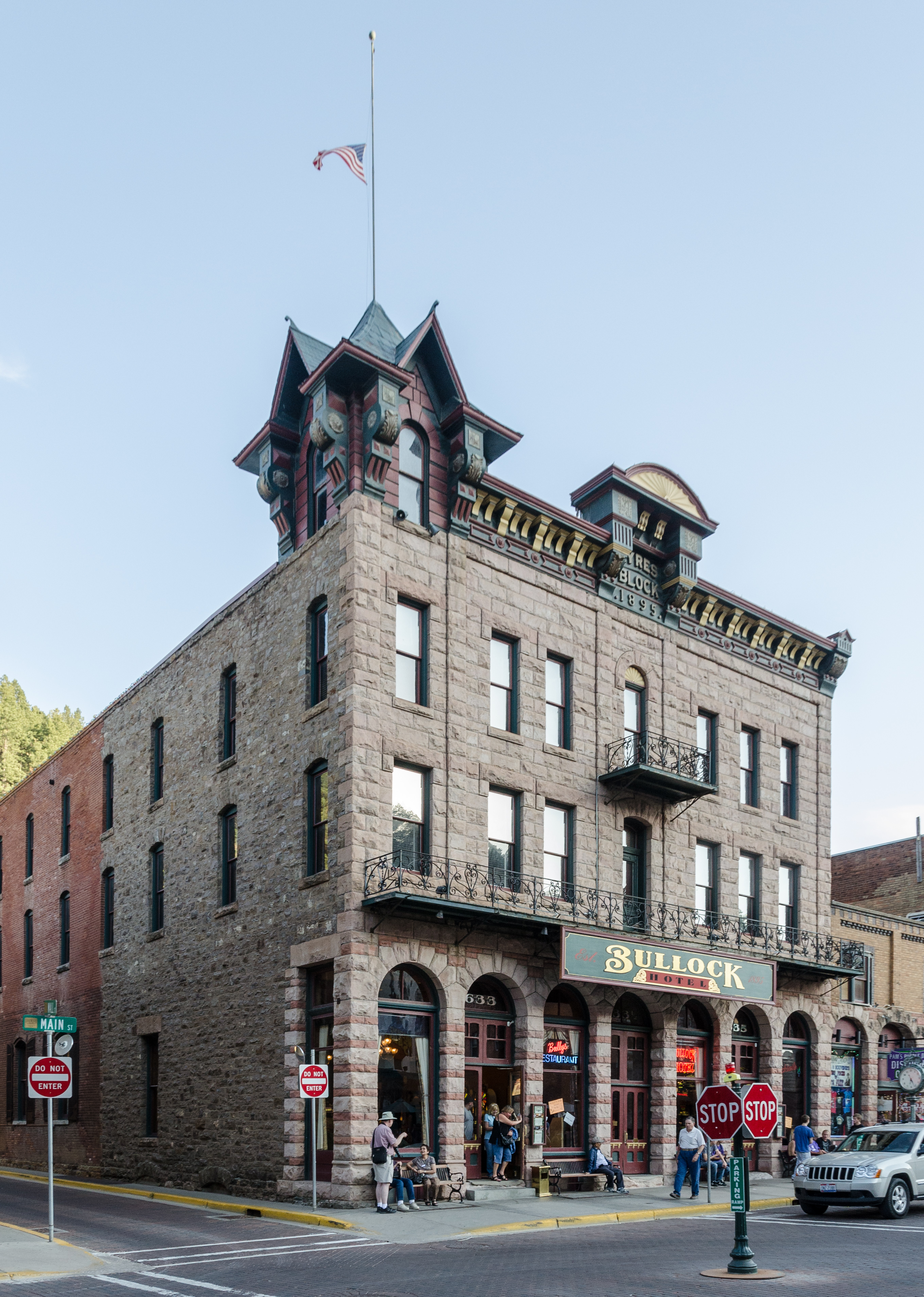
The Bullock Hotel
FIELD NOTE Investigative: Multiple captured child-voice EVPs; Poltergeist activity: Items moved and showers turning on by themselves.
The History
The Bullock hotel’s haunted reputation is tied to a very specific Deadwood story: after the 1894 fire wiped out much of the business district, Seth Bullock and his partner Sol Star pivoted from hardware to hospitality and began building a sandstone hotel on Main Street. The three-story, 64-room Bullock Hotel opened in 1896, and it’s still one of the town’s most recognizable survivors from that rebuilding era.
The Haunting
The hotel’s signature “resident” is Bullock himself, less a tragic ghost story than a stubborn, managerial presence. The hotel claims dozens of reports where a strong paranormal presence is felt in the second- and third-floor hallways, with items moved and showers turning on without anyone touching them—especially when staff are standing around, whistling or humming. For the classic tourist hotspot, local reporting and guest lore frequently point to Room 211, said to have been Bullock’s room, where people describe sudden cigar smoke with no source; like someone’s still doing rounds, checking the place is being run properly.
Don’t ignore the basement/Seth’s Cellar. A regional travel feature says it was used as a smallpox sick ward, and that’s where the child-spirit reports cluster—running footsteps, kids in the hall, and a little girl often called “Sarah.” And if you want something you can actually listen to, Black Hills Paranormal Investigations published multiple on-site EVPs, including one labeled a child’s voice captured in the basement.

Virginia City, Nevada
Silver Queen Hotel
FIELD NOTE Poltergeist activity: Rhythmic fingertips tapping on the outside of window glass; Sensory: Sharp clicking of heels and the sound of running in hallways
The History
Virginia City is a Comstock boomtown built off the 1859 silver strike, and the Silver Queen is one of the survivors that still feels like it’s operating on 19th-century terms. Built in 1876, it’s widely promoted as the town’s oldest hotel, sitting above a saloon anchored by the massive “Silver Queen” portrait made with thousands of silver dollars.
The Haunting
While the downstairs area, including a wedding chapel and crypt, is a documented hotspot for security camera anomalies, the hotel’s most persistent "gritty" history is etched into the floorboards of the upper levels. In a town built on sudden fortune and rapid ruin, the resident legend is Rosie, a 19th-century "lady of the night" who reportedly ended her life in the bathtub of Room 11. This is a sensory-heavy haunting where the "spookiness" is replaced by the sharp, rhythmic clicking of high heels on original wood floors and the disturbing sound of fingertips tapping against the exterior of windowpanes in the dead of night. For those booking for activity, enthusiasts typically request Room 11 and Room 13 as a pair, as they are connected and serve as the primary corridor for both Rosie and a second presence known as Annie, who is frequently heard running through the hallways as if repeating a frantic moment from the hotel's boomtown past.
Coronado, California
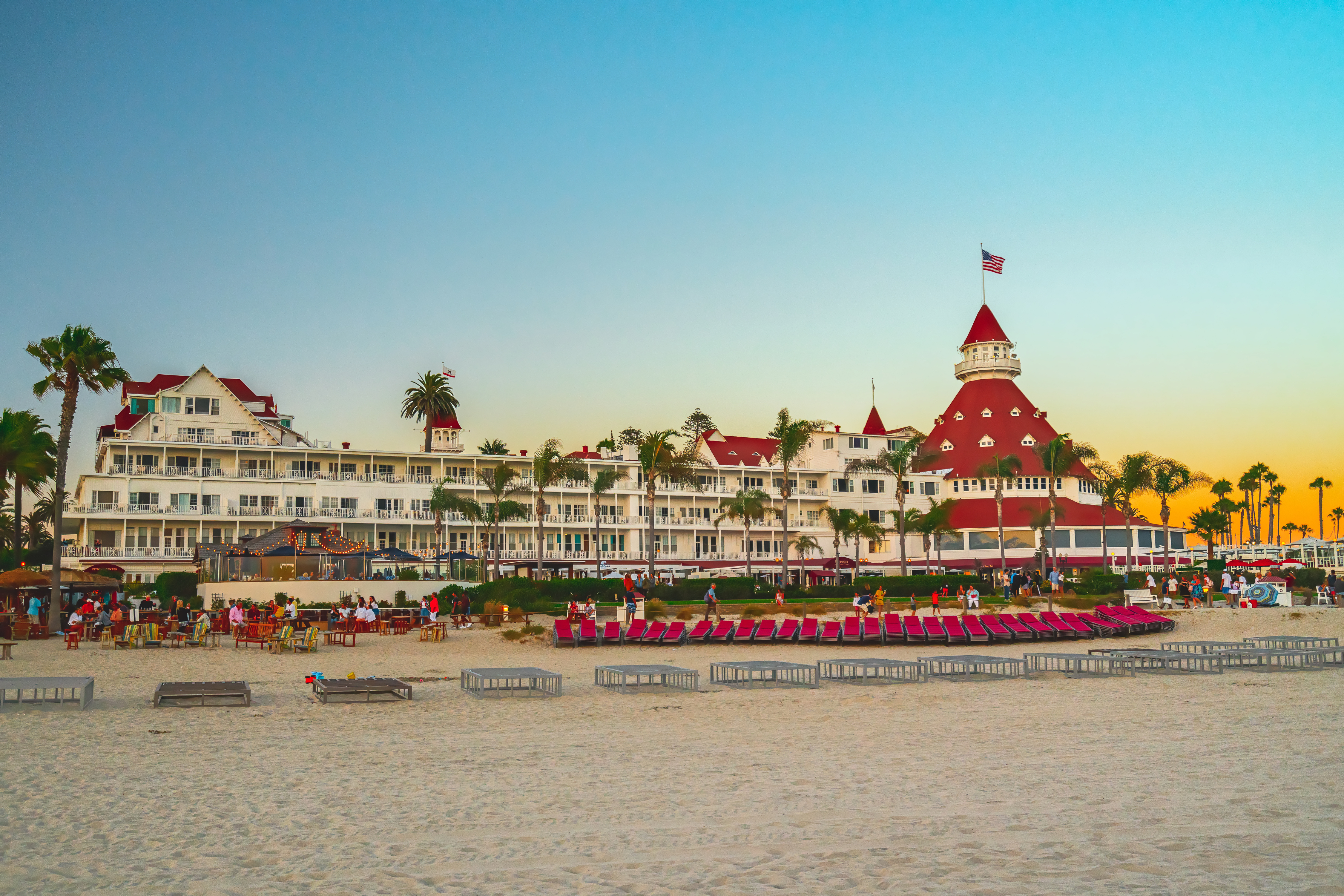
Hotel del Coronado
FIELD NOTE Physical: Nightstand items vibrating and moving; Poltergeist activity: Lights flickering in rhythmic, purposeful patterns.
The History
The Victorian silhouette of "The Del" is inseparable from the documented 1892 coroner’s report of Kate Morgan, the "Beautiful Stranger" whose body was discovered on an exterior staircase leading toward the Pacific. Kate had checked into the hotel under a pseudonym, appearing sickly and waiting five days for a companion who never arrived before her life ended with a single gunshot.
The Haunting
The physical evidence of her stay is centered on Room 3327, where the activity is far from a vague legend. Guests in this specific room have logged sudden, localized temperature drops and the persistent flickering of lights in rhythmic patterns that suggest a lingering presence. The unvarnished reality of the haunting often manifests as physical movement; modern reports include accounts of items vibrating on nightstands or being found moved across the room by an unseen hand. Beyond the walls of the room, the hotel’s raw history is felt on the very staircase where her journey ended, with sightings of a shadowy figure in black lace walking the shoreline or standing motionless against the ocean breeze.
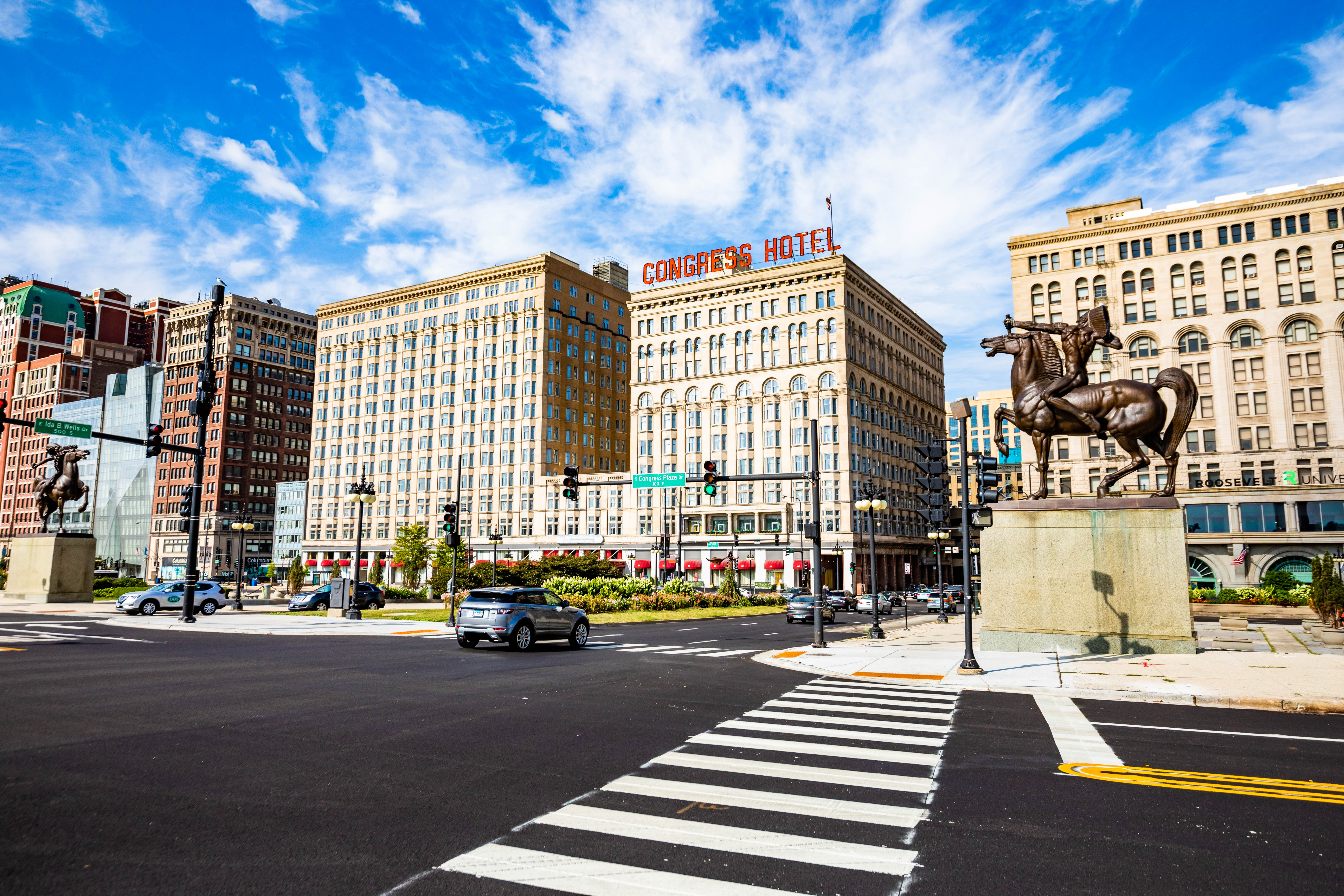
Chicago, Illinois
Congress Plaza Hotel
FIELD NOTE Physical: Violent shaking of bedframes; Poltergeist activity: Scratching from behind masonry and a gloved hand emerging from walls.
The History
The architectural grandeur of the Congress Plaza, built to house the influx of visitors for the 1893 World’s Fair, masks a history of urban tragedy and organized crime that has left a permanent mark on the property.
The Haunting
The hotel’s most undeniable link to the unexplained is Room 441, a space so frequently associated with physical disturbances that it remains one of the most requested, and reported, rooms in the city. Activity here is rarely subtle; guests have documented the violent, rhythmic shaking of the bedframe and the sight of a dark, one-legged silhouette—identified in local lore as "Peg-Leg Johnny"—standing motionless at the foot of the bed. However, the hotel’s most somber history resides on the 12th floor, where the air remains heavy with the memory of the Langer family. In 1939, Adele Langer, a refugee fleeing the Nazi regime, threw her two young sons, Karel and Jan Misha, from a window before jumping herself. While the hotel itself seems to try to forget the event, a long-term security guard with over 30 years of service reported multiple encounters with a boy in vintage, torn clothes. The guard described being met with a silent stare and a grin before the figure slowly dissolved into the hallway. These reports of a child running through the corridors are often dismissed as "spooky" until witnesses describe the specific, antiquated dress and the unsettlingly calm presence of the boy, who has even been reported appearing in the peripheral vision of those off-duty.
The sensory reports extend into the Gold Room, where the unvarnished history of Chicago’s elite meets a more ethereal reality; cleaning crews have repeatedly logged the phantom sound of a crowd applauding in a vacant hall and the sight of a "Dancing Lady" reflected in the room's high mirrors. Perhaps the most unsettling evidence of the hotel’s raw past is the "suicide room" in the basement—a North Tower area sealed off behind a wall where a worker was allegedly buried alive during construction. Security guards and staff patrolling the lower levels have reported the faint sound of scratching from behind the masonry and the sight of a gloved hand momentarily emerging from the shadows of the wall.
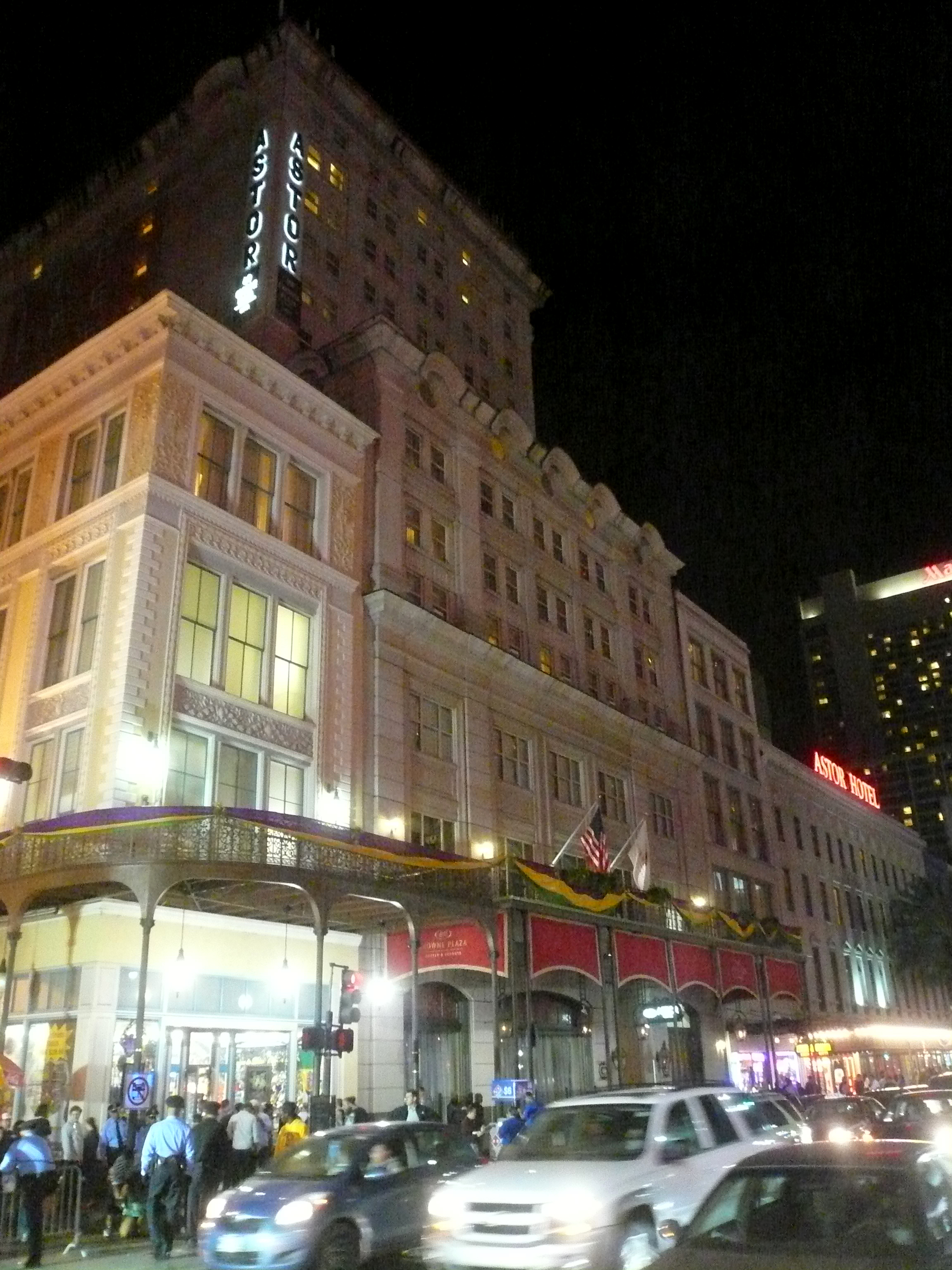
New Orleans, Louisiana
Bourbon Orleans Hotel
FIELD NOTE Sensory: Patter of running feet in quiet halls; scent of old incense and candle wax; faint sound of a non-existent orchestra.
The History
The unvarnished history of the Bourbon Orleans is rooted in its mid-19th-century role as a convent and orphanage run by the Sisters of the Holy Family, a period marked by the devastating Yellow Fever epidemics that swept through the French Quarter.
The Haunting
The physical evidence of this era remains in the building's layout, where the transition from a high-society ballroom to a place of medical tragedy created a unique, dual-layered haunting. Rather than generic "spooky" sightings, the activity here is intensely sensory; guests in the hallways frequently report the sound of children’s laughter and the distinct patter of running feet echoing on the floors when the hotel is dead quiet. On the 6th Floor, the air is often filled with the scent of old incense or candle wax, accompanying reports of a lone Confederate soldier seen pacing the corridor as if standing guard. The most visually striking documented encounter occurs in the Great Ballroom, where a "Dancing Lady" is seen beneath the crystal chandeliers, her presence anchored by the faint sound of a non-existent orchestra that several witnesses have claimed to hear late at night.
COMPARE THE LOCATIONS
Where is the activity
reported most?
The original guide records the primary hotspot and the physical, sensory or investigative activity associated with each property.
| Hotel | Location | Primary Hotspot | Physical Evidence / Activity |
|---|---|---|---|
| 1886 Crescent Hotel | Eureka Springs, AR | Room 218, 419 & Basement | Poltergeist activity: Washers/dryers switching on; Sensory: Squeaking gurney wheels, heavy atmosphere, and sudden temperature drops. |
| The Marshall House | Savannah, GA | Room 211 & Cellar | Physical: Human remains found under floorboards; Sensory: Stubborn "unpleasant odors," doors moving on their own, and phantom laughter. |
| Jerome Grand Hotel | Jerome, AZ | Room 11 & 13 | Physical: Furniture visibly dragged across floors; Sensory: Mechanical rattle of an empty elevator, labored breathing, and phantom cigar smoke. |
| St. James Hotel | Cimarron, NM | Room 17 & 18 | Physical: 22 bullet holes in ceiling; Poltergeist activity: Tapping on windowpanes and an "impish" presence in the bar moving objects. |
| The Alaskan Hotel | Juneau, AK | Room 219 & 315 | Physical: Documented 2007 window jump; Sensory: The "impression" of someone sitting on the bed and the feeling of being touched or pulled. |
| The Bullock Hotel | Deadwood, SD | Room 211 & Cellar | Investigative: Multiple captured child-voice EVPs; Poltergeist activity: Items moved and showers turning on by themselves. |
| Silver Queen Hotel | Virginia City, NV | Room 11 & 13 | Poltergeist activity: Rhythmic fingertips tapping on the outside of window glass; Sensory: Sharp clicking of heels and the sound of running in hallways |
| Hotel del Coronado | Coronado, CA | Room 3327 | Physical: Nightstand items vibrating and moving; Poltergeist activity: Lights flickering in rhythmic, purposeful patterns. |
| Congress Plaza Hotel | Chicago, IL | Room 441 & 12th Floor | Physical: Violent shaking of bedframes; Poltergeist activity: Scratching from behind masonry and a gloved hand emerging from walls. |
| Bourbon Orleans | New Orleans, LA | 6th Floor & Ballroom | Sensory: Patter of running feet in quiet halls; scent of old incense and candle wax; faint sound of a non-existent orchestra. |
TILL THE NEXT TIME
A room can be more
than somewhere to sleep.
Staying at one of these legendary properties offers more than just a brush with local lore; it provides a raw, unfiltered connection to the industrial accidents, frontier violence and medical tragedies that shaped the American landscape. Whether you are drawn by the mechanical rattle of a phantom elevator in Jerome or the persistent scent of rose perfume in Cimarron, these locations prove that the past is rarely silent. For those on their own "Unknown Quest," these hotels serve as a reminder that the most compelling stories are often the ones that refuse to be buried under floorboards or forgotten behind padlocked doors. As you plan your next stay, remember that you aren't just booking a room—you are checking into a living archive where the boundary between historical record and the unexplained remains thin.
For those on their own Unknown Quest, these hotels serve as a reminder that some of the most compelling stories are the ones that refuse to stay buried.
Gemma — The Unknown Quest
*Just as a side-note where possible I have cross-checked claims against hotel history pages, local archives, historical societies and reputable publications to obtain as accurate a list as possible.
THE UNKNOWN QUEST ARCHIVE
Keep exploring.
Each hotel above includes direct links to the investigation footage, hotel or booking page and tours included in the original guide.